
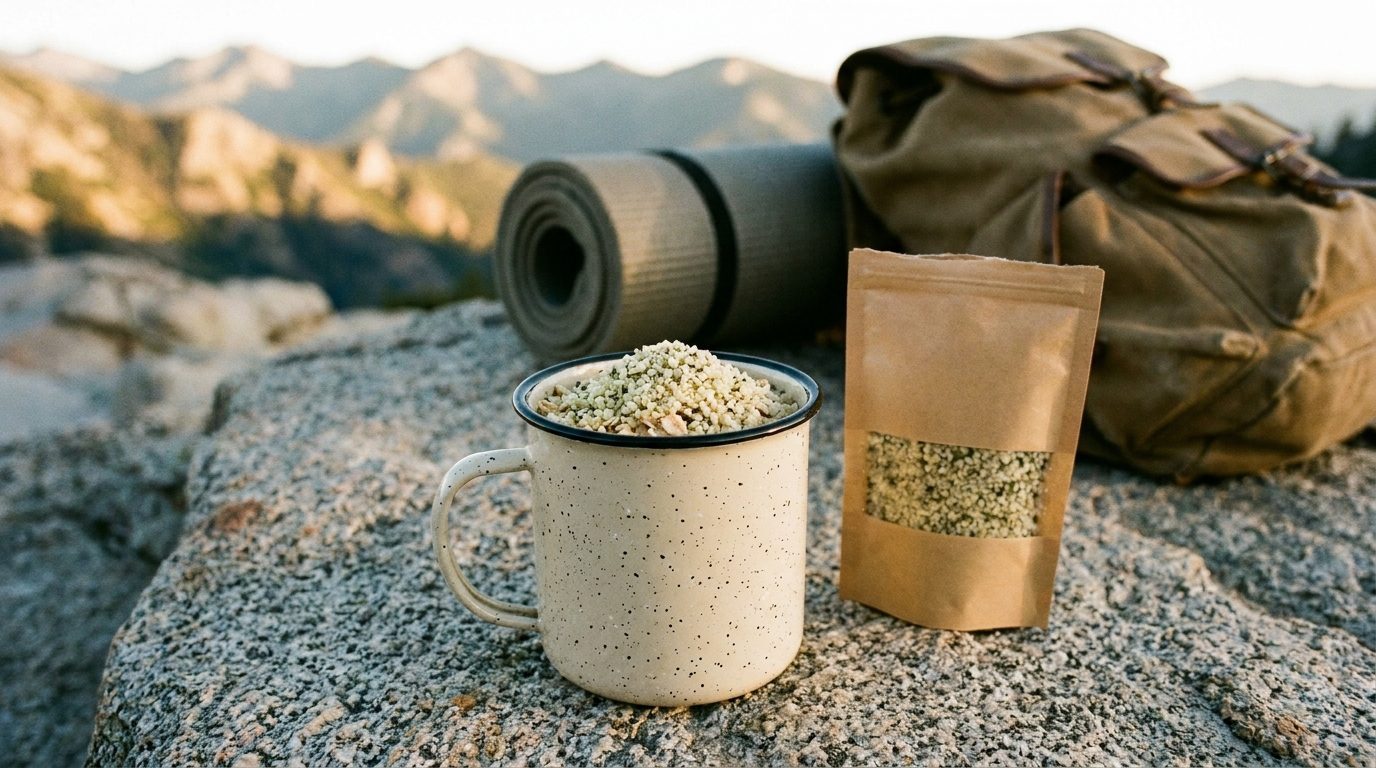
Trail food is judged by three numbers: calories per gram, protein per gram, and how much abuse it takes in a pack. Hemp hearts score remarkably on all three, which is why they have quietly become a backpacking staple among people who weigh their food with scales instead of opinions.
The pack math
Hemp hearts run about 5.5 calories per gram, in fuel-dense company with nuts and well ahead of dried fruit or jerky, and they carry roughly 33 percent protein with no cooking, no soaking, and no can. They do not crush, melt, leak, or shatter at the bottom of a pack, and a 30 gram serving disappears into any trail meal.
How they earn their place on trail
- Breakfast: two spoonfuls into instant oatmeal turns a thin packet into a real meal, no extra cook time.
- Trail mix that does work: hearts plus nuts, chocolate, and dried fruit raises the protein floor of the whole bag.
- Dinner finisher: stirred into any rehydrated meal off the stove, they add fat, protein, and a texture upgrade to freeze-dried suppers.
- Emergency calories: eaten straight by the spoon when weather cancels cooking; not gourmet, entirely functional.
Heat, and how much to worry
Hemp's delicate fats prefer cool storage, and a summer pack is not cool. For trips up to a week or two, a sealed bag in the middle of the pack is fine; rancidity is a months-scale process, not a weekend one. For long thru-hikes, portion hearts into resupply boxes rather than carrying a month's supply through August. Repackage into a doubled zip bag and squeeze the air out, the same oxygen logic as home storage.
The weight-versus-everything verdict
Per gram carried, hemp hearts buy more usable nutrition than almost anything that needs no stove. They will not replace dinner; they make every dinner, breakfast, and handful in between measurably better, which is exactly what a pack staple is for.